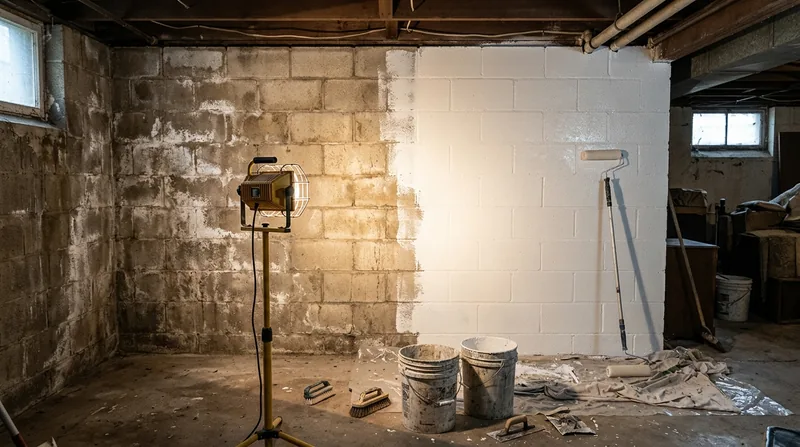



Basement Wall Sealing in Anderson
Anderson sits on the flat Tipton Till Plain, where the White River winds through dense glacial till that drains slowly and keeps the water table high. That geology hits below grade: 1880s Victorian and Queen Anne homes in the West Central historic district sit on limestone and brick foundations that wick moisture, while 1920s to 1960s auto-worker bungalows and foursquares on the north and south sides have full basements that see seepage every spring. If you need Basement Wall Sealing in Anderson, the job starts with an honest read of what is actually wet and why. We prep the surface, remove efflorescence, and apply penetrating or membrane sealers for damp walls, and we tell you plainly when a sealer is the right fix and when hydrostatic pressure means the wall needs more than a coating. Call (765) 227-3614 to schedule a free basement inspection. Start with our basement waterproofing service page for the full picture.
Why Anderson Basements Get Damp Walls
Madison County's glacial clay soil holds water instead of shedding it, and the White River, Killbuck Creek, and Fall Creek all rise fast after spring storms. Add hard freeze-thaw cycles and heavy summer thunderstorms, and the walls in Edgewood ranches and Anderson University split-levels take a beating. Most damp walls we see are not a sealer problem at first, they are a drainage and pressure problem.
- Hydrostatic pressure pushes water through brick, block, and poured concrete, and a surface sealer alone cannot hold it back.
- Efflorescence, the white chalky bloom on block walls, tells you water is moving through the masonry and leaving mineral salts behind.
- Clogged or collapsed footing drains around older homes send roof and groundwater straight to the wall instead of away from it.
- Downspouts that dump within a few feet of the foundation saturate the soil right where the wall is weakest.
- Hairline cracks in poured walls let in seepage that a membrane sealer can bridge but not always stop.
We sort those causes before we quote a sealer, because coating a wall that is under active pressure just traps the problem behind a film.
Key info: A Queen Anne on West Eighth Street in Anderson's historic district had chalky white bloom across the entire limestone wall every March. The sealer was not the fix, the missing downspout extensions and a failed footing drain were. We corrected drainage first, then sealed the wall.
Permits for work that alters drainage or structural foundation repair are handled through the City of Anderson building department, and rules vary, so verify before work starts. You can check the City of Anderson official site for current department contacts.
How We Seal Basement Walls in Anderson
We treat wall sealing as a diagnostic job first. On a 1950s block basement in Shadyside, that might mean tapping the wall for hollow spots and checking the sump basin; on a 1990s poured wall in Pendleton, it means reading the crack pattern and the grading outside. The steps below are what a typical sealing visit looks like.
- We walk the basement and the exterior grade, then note where water enters and where it pools.
- We clean the wall and remove efflorescence, loose parging, and old failing coatings so the sealer bonds to sound masonry.
- We repair active cracks with epoxy or polyurethane injection before any sealer goes on.
- We apply a penetrating sealer for damp masonry or a membrane sealer where the wall needs a flexible barrier.
- We correct grading and downspout extensions so water leaves the foundation instead of soaking the wall.
- We tell you if the wall needs an interior drain tile system or exterior excavation rather than a sealer.
If the inspection shows pressure-driven water, we say so and point you to the right system instead of selling a coating that will fail.
Key info: A foursquare near Delco Remy had damp walls only along the river-facing side. The sealer held there, but the opposite wall needed foundation crack repair for an active pour crack. Two different problems, two different fixes.
Sealing Approaches We Use
Not every damp wall wants the same product. We match the approach to the wall material, the moisture source, and whether the wall is under pressure. The table below is the short version of how we decide.
| Approach | Description | Best for |
|---|---|---|
| Penetrating sealer | Soaks into brick, block, or concrete and blocks capillary moisture without a surface film. | Damp, chalky walls with no standing water. |
| Membrane sealer | Flexible coating that bridges hairline cracks and resists mild seepage. | Poured walls with fine cracks and light weeping. |
| Crack injection plus sealer | Epoxy or polyurethane injection closes active cracks before sealing. | Walls with visible cracks that leak after rain. |
| Drainage correction plus sealer | Grading, downspout extensions, and drain work to relieve pressure, then seal. | Walls wet only after storms or spring melt. |
| Interior drain tile | Perimeter drain and sump system to manage hydrostatic water at the footing. | Walls under real pressure, not just damp. |
If the table points to drainage rather than a coating, we say so on the spot and explain the alternative.
Basement Wall Sealing Cost in Anderson: What to Expect
Most basement wall sealing jobs in Anderson start around $1,500, and that figure covers cleaning, efflorescence removal, and a sealer on a typical single-wall or small basement. The price moves with wall length, wall material, how much prep the masonry needs, and whether active cracks need injection first. A limestone wall in the West Central historic district takes more prep than a clean poured wall in Pendleton.
We quote after we see the wall, not over the phone, because a damp wall and a leaking wall look similar in a photo and price very differently. Get two or three estimates and compare what each one includes: prep, crack repair, sealer type, and drainage correction. Our full pricing overview lays out the ranges so you can compare apples to apples.
Choosing a Basement Wall Sealing Contractor Near Me in Anderson
Hiring for below-grade work near Anderson means asking a few plain questions before anyone touches the wall. A contractor who seals walls should also be able to tell you when sealing is not the answer, and that honesty is worth more than the lowest bid.
- Confirm the company is licensed and insured, and ask for a certificate of insurance before work begins.
- Get two or three written estimates that list prep, materials, and any crack repair separately.
- Ask for local references on homes built like yours, whether brick, block, or poured concrete.
- Ask who pulls any permit required for structural or drainage work and confirm the local building department rules.
- Ask what warranty applies and whether it is transferable to the next owner.
We are a Basement Health Association member and a dedicated below-grade specialist, not a general foundation firm or a plumber, and we will tell you when a sealer is enough and when it is not. Reach out through our contact page or call (765) 227-3614 for a free inspection.
Basement Wall Sealing in Anderson: Pricing Guide
| Service | Price | Details |
|---|---|---|
| Single wall sealing | Starting at $1,500 | Includes cleaning, efflorescence removal, and penetrating or membrane sealer on one wall. |
| Full basement sealing | Starting at $2,800 | Covers all walls with prep and sealer; price rises with wall length and masonry condition. |
| Sealing with crack injection | Starting at $2,200 | Adds epoxy or polyurethane injection on active cracks before the sealer is applied. |
| Complex or large-scale job | On estimate | Historic limestone, heavy efflorescence, or drainage correction needs an on-site look first. |
| Travel | Included | in Anderson and surrounding areas, no separate call-out or mileage fee. |
| Estimate | Free | Response within 24h at (765) 227-3614, no obligation to book. |
Indicative pricing, the exact cost depends on square footage, finish, and site access. Free personalized estimate within 24h at (765) 227-3614.


